Showing posts with label Books. Show all posts

Wednesday, April 3, 2013

Existential Teenage Problems and Crappy Kingdoms


Intentional or not, modern parenting prepares kids to reach lofty personal accomplishments in high school, ultimately propelling them towards success in college and beyond. Beyond, though, produces quite a bit of anxiety in most adolescents.  A definite end point with looming unanswerable questions exists for every overly-structured childhood.  Will I get into college?  What kind of college?  What’ll I do after college? Most teenagers go to school, do their homework and avoid thinking about these things because they’re unable to come up with plausible answers.

That’s not even addressing what happens when teenagers fall short of their imagined success.  Motivation, skill, physical health, mental health, intelligence and competition are all variables that get in the way of lofty goals.  Joe Mauer was a monster for his high school baseball team in Saint Paul, and I always wonder about the average high school athlete backing him up and sitting on the bench every season.  What does he do with himself when he realizes his star potential will never be achieved?  

Well, he might end up in one of DC Piersons two novels.  Both of his narrators are suburban males with quite a bit of anxious uncertainty in their lives.  Darren, the narrator in The Boy Who Couldn’t Sleep and Never Had To, avoids most of the hard questions I’ve brought up by creating a fictional narrative full of cyborgs, zombies and mechwarriors, which is a great hobby but doesn’t supply much status or extrinsic rewards in high school.  Tom, the narrator in Crap Kingdom, is having a little more success in his school’s theater department but is too distracted by his own thoughts to enjoy it.
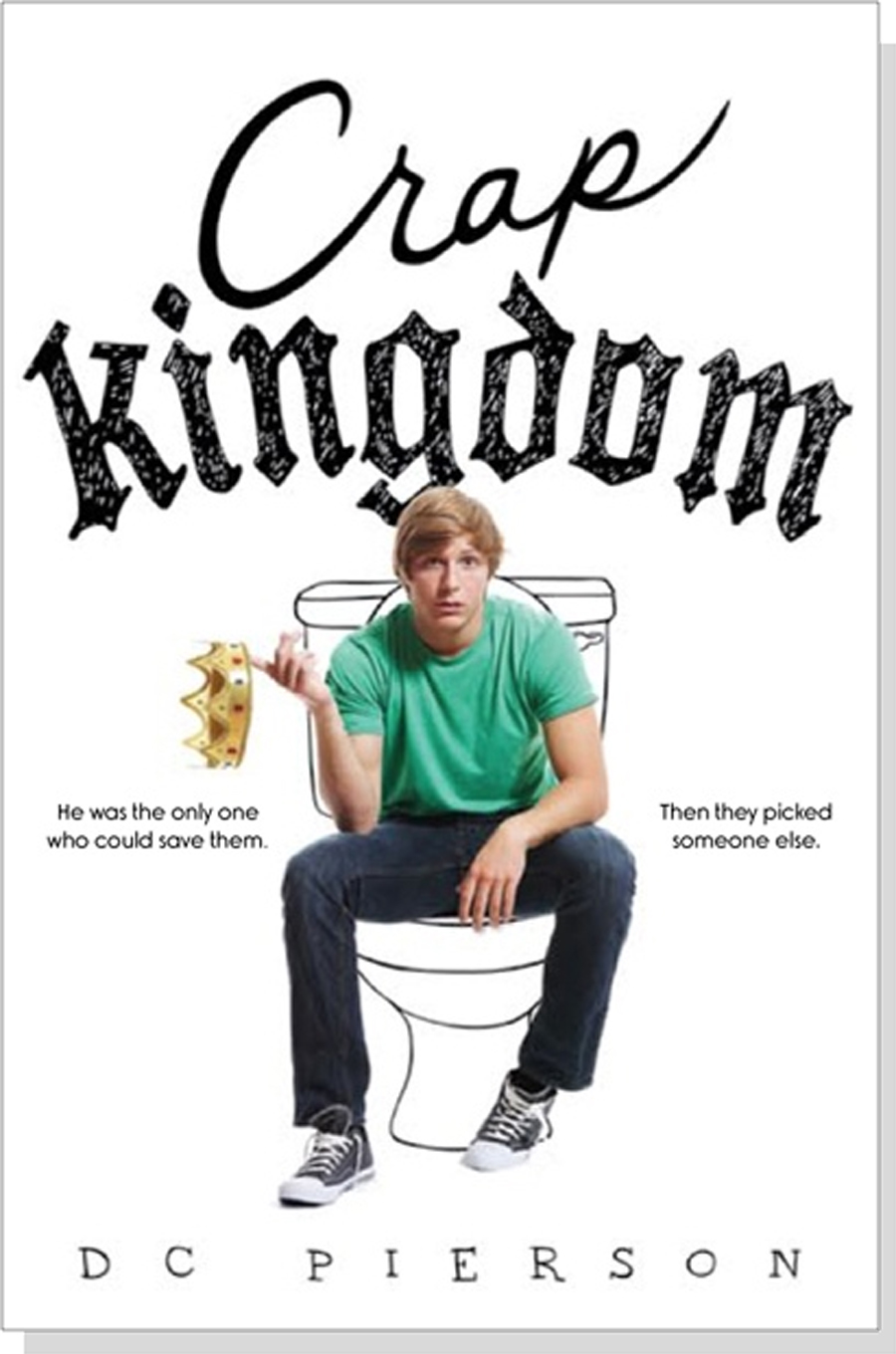

Both characters fall short of their perceptions of success and Pierson’s strong characterization unfolds as their disappointment and existential avoidance mixes with awkward teenage development.  Like most teenagers, they can’t see past their present situations because of their inability to realistically imagine the future.  Somehow being on the run with a kid who doesn’t need sleep or traveling to a fantasy kingdom makes more sense than thinking about college.


I think this is why people have such a hard time relating to teenagers.  I can imagine myself fairly accurately in 5 years:  Awesome beard, living in my house, married to my wife and planning for a garden in the Spring.  I’m aware all of those things could change (except for the beard, of course) but I’m also aware they may not.  Ask a 17 year old to imagine himself at 22 and you’ll either get lots of generalities or else a blank stare while he wonders if a lightsaber or flight would help him more in a zombie apocalypse.  Pierson understands this teenage distinction and writes it really well.

I enjoyed the story more in The Boy Who Couldn’t Sleep and Never Had To, which is set in high school but written for adults.  It gets a bit fanciful and dark in the third act, but both give Darren’s overall narration a sense of authenticity I appreciated fully after finishing the novel.  Crap Kingdom is a YA novel set in high school that I enjoyed more in the beginning than the end, which probably speaks more to the YA nature of storytelling than anything Pierson could have done differently.

Both narrators do their best to ignore tough existential questions about the eventual death of their childhood but eventually realize the impossibility of infinite avoidance.  They accept the limits of their abilities with varying levels of success.  For Darren, it means he has to leave his fantasy world behind and live in the only one available to him.  For Tom, it means he also has to leave his fantasy world behind and be more open to unexpected deviations in the future (like other fantasy worlds).  Their acceptance of their existential situations gives them the freedom to go forward into adulthood.

Sunday, February 10, 2013

Don't be a writer, be a man of God who writes

Playfully smiling in the shade is how we
should all think of contemplative prayer.
Finishing Thomas Merton’s Seven Storey Mountain feels like quite an accomplishment.  Dense writing combines with heavy theology combines with my own dislike for memoirs and autobiographies (I rarely care about childhood friends or their parents) might make you think this was a chore to finish.  

In a way, I suppose it had those moments.  The first 2/3rds of the book are spent on Merton’s childhood and as a young adult going to college in New York City.  It’s overly descriptive and focuses on factual happenings.  Merton’s lack of depth either speaks to his own unawareness at the time or his current disinterest in reflecting on past events. This time in his life feels hollow to him as a writer and comes off as shallow to the reader. Brief moments within the shallows, however, find Merton pondering if something greater is out in the world, reminding us of the spiritual depth he’ll soon discover in himself.  

The rapid movement from self-centered intellectual to trappist monk feels a little abrupt, but no more than it did for Merton.  I reread whole chapters in the last third of the book just to keep up with his quickly evolving spirituality and life.

Three things stuck out for me while reading this last section:

1.  Merton’s astonishing sense of self-sacrifice associated with his faith.  Faith through sacrifice isn’t something we hear very often in today’s world. For Merton, a lack of sacrifice meant a lack of meaning. He became Catholic and sought the priesthood not because he loved everything in his life but because he felt unfulfilled with his life. He originally contemplated joining the Franciscans because his personality naturally fit with with their order, but would putting a square peg in a square hole bring him the spiritual satisfaction he craved?

Somehow, sacrificing sex and money didn’t carve enough of him out to make room for God.  Without sacrifice, there could be no spiritual gain for Merton.  Joining the trappists and embracing worldly sacrifice gave Merton the focus he needed to embrace God entirely.

2.   Merton’s writing style changes in the book from factual to meaningful, which is a line I struggle to straddle most days.  I’m a linear thinker (A leads to B leads to C...) and I easily fall into a linear trap when approaching my days.  Seriously, sometimes Kelly comes home, asks me about my day and I relay the order of my day (I went to work, I answered the phone, I wrote some emails) instead of telling her about my day (I’m kind of tired, this conversation really made me think, I’ve been craving breakfast for dinner all day).  Factual vs. emotive  isn’t the right phrasing, but it’s pretty close.  

When Merton hits the last third of his book, his writing goes from relaying information to really wading into heavy topics.  He recognizes his vocation called him to the sudden depth he found himself.  When I’m rooted and healthy, my mind moves to places beyond the daily happenings around me.  I write more.  I exercise more.  I have conversations more often.  A lot of my early life centered on moving linearly from place to place, recognizing an unfulfillment in me but not knowing what to make of it.  I’m not about to join a trappist order (sacrificing sex sounds awful) but I love the path Merton laid out and his ability to express the depth he discovered within his sacrifice.   

3. Most of us, when we imagine trappist monks, we think of priests sitting silently in a room praying endlessly.  In reality, Merton became a farm hand on a functional farm cut off from most of the world.  He learned how to actively pray in order to accomplish his daily chores while remaining in constant contact with God through prayer.  Not at all what he was expecting.

Side Note:  All three of these things happened in the last third of the book.  Seriously, just skim the first 2/3rds.  You won’t miss much.

Kelly knew me for a year before we dated.  Was she waiting and hoping I’d notice her during that year?  Nope.  She actively hated me.  This is a woman who values kindness above all else, and yet managed to tell everyone she knew how much she disliked me. A little full of my own nebulous abilities and an overall belief that I had an internet fueled witty answer to everything kept her at arms reach.  I loved the celebrity that came with being a leader on a small college campus and she hated the ego that came with it.

Fast forward a lot, and now I’m a leader in a small school as a guidance counselor. I came to understand my own pitfalls associated with professional titles and pushed them aside to embrace contemplative simplicity and a career focused on helping others.  Lately, I’ve found myself in situations where a leader is needed and I see the path the leader needs to take.  I’m intimidated not by the challenges this represents but by the possibility of slipping into a linear thinking stratagem that accomplishes a lot but leaves me unfulfilled at the end of the day.

The key, and I think Merton would agree, is to take the path in front of you while embracing the sacrifices needed to maintain a contemplative prayer life.  Contemplative prayer may not make me a great leader, but it’ll help me be a great ‘me’ as I lead.

Saturday, November 3, 2012

Don't forget to look up


One of my favorite college courses had nothing to with my major, my minor or my attempted, and eventually jettisoned, music minor. That’s right, a horror movie film class remains my favorite class in college. Not the gross out torture-porn we’ve seen the last few years or endless spin-offs, but horror movies trying to say something within their genre.

Stephen King's horror novels have great messages within their grisly stories. The Shining tells a story about alcoholism destroying a modern family through a haunted hotel driving a man crazy. The Cell tells a story about the lemming culture of technology through cell phone created zombies. Misery tells the story of the contraints of obsessive fan demands through an actual obsessive fan. I love the boundaries genre-fiction provides and the creativity authors have within those boundaries to tell different messages.

My love of genre fiction, while also explaining my love affair with superhero comic books, brought me to The Dog Stars by Peter Heller. End-of-the-world fiction is pretty popular right now, and there’s a lot of themes running around as authors wonder what the heck would happen if 99.9% of the world suddenly died/turned into zombies/got nuked.

Moslty, as one would expect, things get really f-ed up. Suzanne Collins (The Hunger Games) imagines America would get pretty totalitarian and hyper-focused on violence as entertainment. Cormac McCarthy (The Road) sees a father’s bond overpowering the horrors of a lawless America. Robert Kirkman (The Walking Dead) looks at everyday people struggling to make sense of their world and coping with their own horrific actions needed for survival.

Taking a different approach, Heller looks for hope and vitality in his novel about a small aircraft pilot living in Colorado after 99.9% of the world dies of the flu. Sure, there are some tragic scenes (a flashback to the main character’s wife dying in an overcrowded hospital), but Heller doesn’t dwell on the awfulness. In fact, the novel opens after the plague and the ensuing lawless chaos has already died out. Heller’s characters have survived and are left searching for what comes next.

That search for meaning plays itself out many times in other novels and movies, but not so much in end-of-the-world sagas. The way Hig, the main character, realizes there's more to life than day-to-day survival and the emotions he goes through looking for that meaning kept me coming back to the book more than the standard lawless theatrics inhabiting most apocalypse genre fiction.

Don't let my comparisons to other books make you think this one doesn't stand on it's own. When Heller isn’t writing novels, he’s a regular contributor to a lot of outdoor magazines. His loving familiarity of nature offers wonderful backdrops for much of the novel. Fishing, hiking, gardening and sleeping outdoors all make appearances in the novel and always seem to herald some level of healing and normalcy for Heller’s characters.

Monday, September 17, 2012

Teddy, my Teddy

Usually, when I finish a good biography, I grieve for the person whose life I’ve been following.  I’ve seen the ups and downs of their lives and when they finally pass along, well, some part of me is sad they’ve left me and the rest of the world behind.  

I surprised myself, though, because when I finished Edmund Morris’s third, and final, installment of Teddy Roosevelt’s life I didn’t have an urge to grieve. I had an urge to go back and start rereading all three volumes all over again.

Now, I don’t see that happening anytime soon (2488 total pages) but I came away from the latest volume wanting to know more about Roosevelt.  I’ll say that again in case you missed it:  After reading 2488 pages about Teddy Roosevelt, I just wanted more.  

By today’s standards, it’s difficult to wrap our minds around how popular he was with the American people and all the things he accomplished pre-Presidency, Presidency and post-Presidency.  In fact, it makes sense that this is why Morris broke his volumes up in the ways that he did.  Any man who accomplished a third of what Roosevelt did in his entire life would deserve a biography, and trying to cram everything into one volume would have been an impossible read, both for its omissions and its length.

This third volume follows Roosevelt after he leaves the White House, tours Africa, breaks apart from his own party to create a 3rd party, causes that former party to lose the next presidential election because he dislikes their direction, explores South America, predicts WWI before anyone else and writes/speaks to thousands of people on a regular basis.  No modern President could boast Teddy’s global popularity after leaving the White House or have as much influence on modern politics as he did in his time.

This volume also sees the world moving past Roosevelt as planes become more important in warfare than his beloved calvary and electricity becomes the norm (he eventually succumbs and has his house wired but not heated).  His Victorian ideals toward society and warfare were challenged by the random unheroic nature of modern warfare and the Bolshevik revolution in Russia.  

Even after finishing this volume, it’s hard for me to describe Roosevelt without listing off his accomplishments.  His Victorian sensibilities lacked a lot of emotion and/or personal reflection, so my image of him as a person is always shrouded behind proper behavior and larger-than-life achievements.  

It seems, after 2488 pages, that I still don’t know Roosevelt well enough to grieve for him and need to dive back into Morris’s volumes, which isn’t a critique of Morris’s extensively detailed biography.  It speaks to the quality of writing (I’d enjoy reading these again) and the complexity of the man on which they’re written.

Monday, July 23, 2012

Insert baseball metaphor here

Here’s a confession for you:  Baby Boomers bug me.

Don’t get me wrong, I love a lot of Baby Boomers.  My mother happens to be one as well as many other members of my family.  Some of the best mentors and teachers I’ve had in my life have been Baby Boomers, but man when they all get together do they ever bug me.  

Their need to always stay young or their inferiority complex about their parents’ generation or the crippling effect they’re having on pension plans because they want to be retired for 40 years before dying.  50 is the new 30!  Blow me.  

So imagine my surprise when I loved The Brothers K by David James Duncan, a family drama set in the 1960s.  We follow the Chance family through the eyes of a middle child as he, his brothers and sisters, grow up worshiping their father, baseball and navigating their way through adolescence, adulthood and Vietnam.

I wrote that last word (Vietnam if you’ve already forgotten), with a little trepidation.  Baby Boomers love to write/talk/sing about Vietnam and, not surprisingly, it bugs me.  So much has been written about it and said about it and copied about it, that most aspects of literature/television/art that references it feels cliched.  Surprisingly, though, I don’t hold it against Duncan or his novel when the story stalls while he writes his obligatory Vietnam hate-letter.  A brother gets drafted and sent to Vietnam unjustly and he has a breakdown from it?  Color me bored.

I should hold it against Duncan and his story, I know.  The thing is, by the time it happens I’m in love with all members of the Chance family to such a degree that I don’t care.  
These characters become so real so quickly that I end up just wanting to spend time with them, regardless of the circumstances.  Duncan hero worships the Dad and baseball a bit, but no more than most Baby Boomers hero worship their Dad and baseball.  Besides, Duncan at least acknowledges faults with both, something a lot of Baby Boomers still have trouble doing.  

These beautifully flawed, broken characters manage to grow up while themes of theology, philosophy and morality swirl around them.  Again, this kind of mentality from Baby Boomers (“We questioned everything!  All of us!  All the time!) wears on me, but Duncan handles it beautifully with his messy characters, love of baseball and adoration for father figures.

Saturday, May 19, 2012

Gone, but not lazy

Even though my blogging has suffered the last month, please don’t think I’ve been remiss in my mission to become a better man through my actions, thoughts and daily interactions.  I’ve had two big DIY projects I’m hoping to present to you, my nearly 10s of readers, as well as some warmer weather thoughts as the school year melts into summer vacation.  I coach lacrosse, which takes up the most time of all my extra curriculares, but I’ll be back on the blogging horse soon enough.  

Right now, I’d like to take some time to go over some media I’ve been digesting the last few weeks.  Mostly music and books (my preferred media intake) of one kind or another:

Tegan & Sara “The Con” - This definitely fell into my Bob Dylan theory of music where I hate it at first listen but my annoyance quickly evolves into deep appreciation.  Strong lyrics and interesting sound structure make up for any feelings of vocal repetition.  


Astronautalis “This is our Science” - An indie rapper who recently relocated to the Twin Cities from Portland.  Great lyrics, a commanding voice and interesting things to say.  What’s not to love?


“Zone One” by Colson Whitehead - Check out my review on Goodreads

“Daredevil” by Brian Michael Bendis - I’ve read a lot of comics.  A. Lot.  And let me say these issues are some of the best I’ve ever seen.  The pacing of smaller stories within larger overarching plots is incredible, the characters jump off the page with caring authenticity and the way they acknowledge 50 years of backstory without getting bogged down in it should be used as the standard for current comic book writing.


“Usagi Yojimbo” by Stan Sakai - I love westerns, and a lot of westerns borrow heavily from the Samurai history and mythologies of ancient Japan.  Sakai has been writing this comic for more than 20 years telling the story of Yojimbo, a masterless samurai who travels across the Japanese countryside.  Some of the stories are single issues that look at Japanese culture, folklore and art, while others are longer narratives.  Slower, novelesque pacing and recurring characters who become more complex and entwined with each issue.